Can You Add a Security Screen to an Existing Front Door?
The short answer for Moreton Bay homeowners? You don’t need to rip out your entire entry to get better security. Whether you’ve got a 40-year-old timber frame or a brand-new pivot door, retrofitting a security screen is almost always a straightforward job.
Whether you've got a standard timber jamb or a modern aluminium pivot, adding a screen is the best way to get some airflow and peace of mind without ruining the look of your house. In this guide, we’re breaking down the AS 5039 standards in plain English, explaining how to avoid that annoying 'handle clash', and which materials actually stand up to our coastal salt air over the long run.
The Short Answer: Retrofitting Security Screens
If you’re worried that a security screen means ripping out your front door and starting over, you can relax. Adding a screen doesn't require any structural changes or surgery to your existing door.
Think of it as a completely independent unit; it simply installs into the frame just in front of your main entry.
It’s an Add-On, Not a Replacement
Unlike a standard door that sits deep inside the rebate, a retrofitted screen is usually mounted to the external face of your architrave. This means your current entry stays exactly where it is, so you don't have to worry about your chunky timber pivot or that classic glass-paneled door being touched.
No damage, no changes, just an extra layer of protection!
How it Fits (Even on Tricky Frames)
If your door handle sticks out too far or your frame is shallow, we use a build-out frame. This creates the necessary clearance between the two doors and provides a square mounting surface; even if your house has settled and the original frame is slightly out of place.
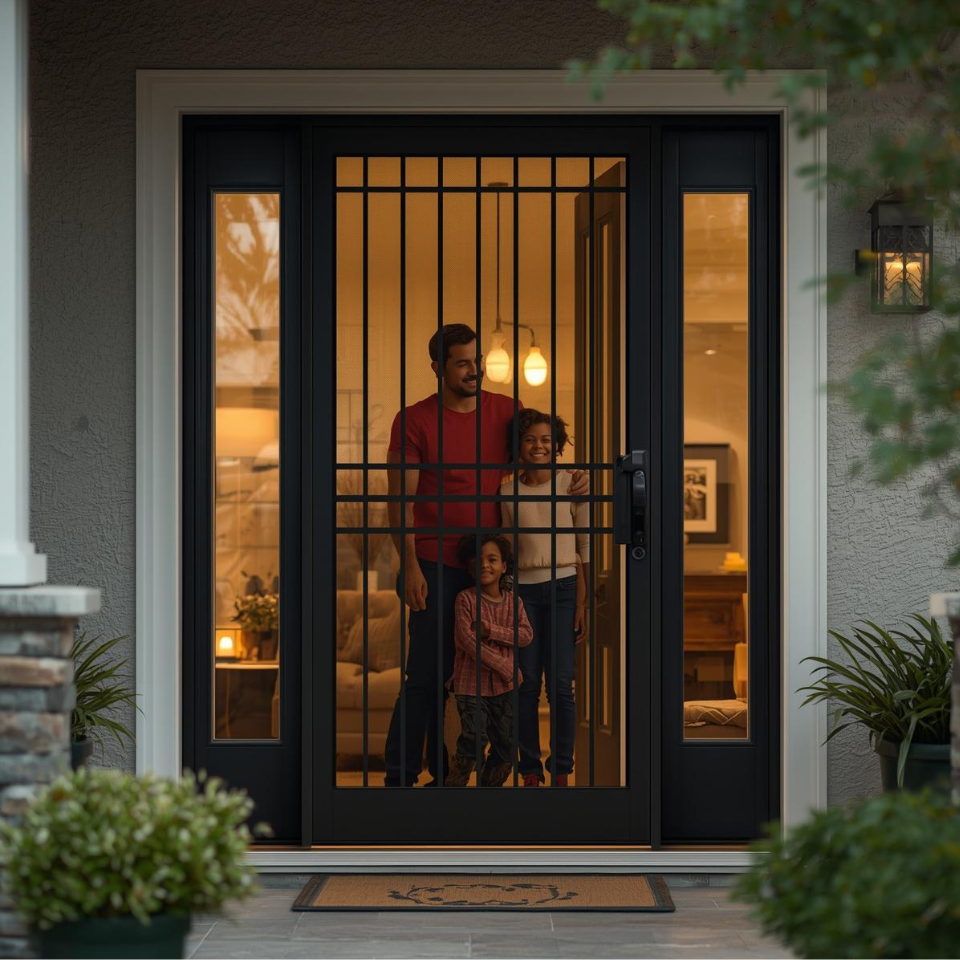
Compatibility: Does Your Door Frame Qualify?
Most doors are perfect candidates for a retrofit, provided we check three things:
👉 Frame Depth
Ensuring there’s enough "meat" in the frame to anchor a heavy-duty door.
👉 The Threshold
Making sure the ‘sill’ you step over is solid enough for the bottom track.
👉 The Swing Path
Confirming the new screen can open outward without hitting porch lights or pillars.
Essential Components: What Makes it ‘Security’?
In Australia, 'security door' isn't just a label, it’s a legal distinction. If a screen hasn't passed AS 5039 testing, it’s technically just a fancy flyscreen. For a screen to actually do its job, it comes down to three non-negotiables:
1️⃣ The ‘Torture Test’ (AS 5039)
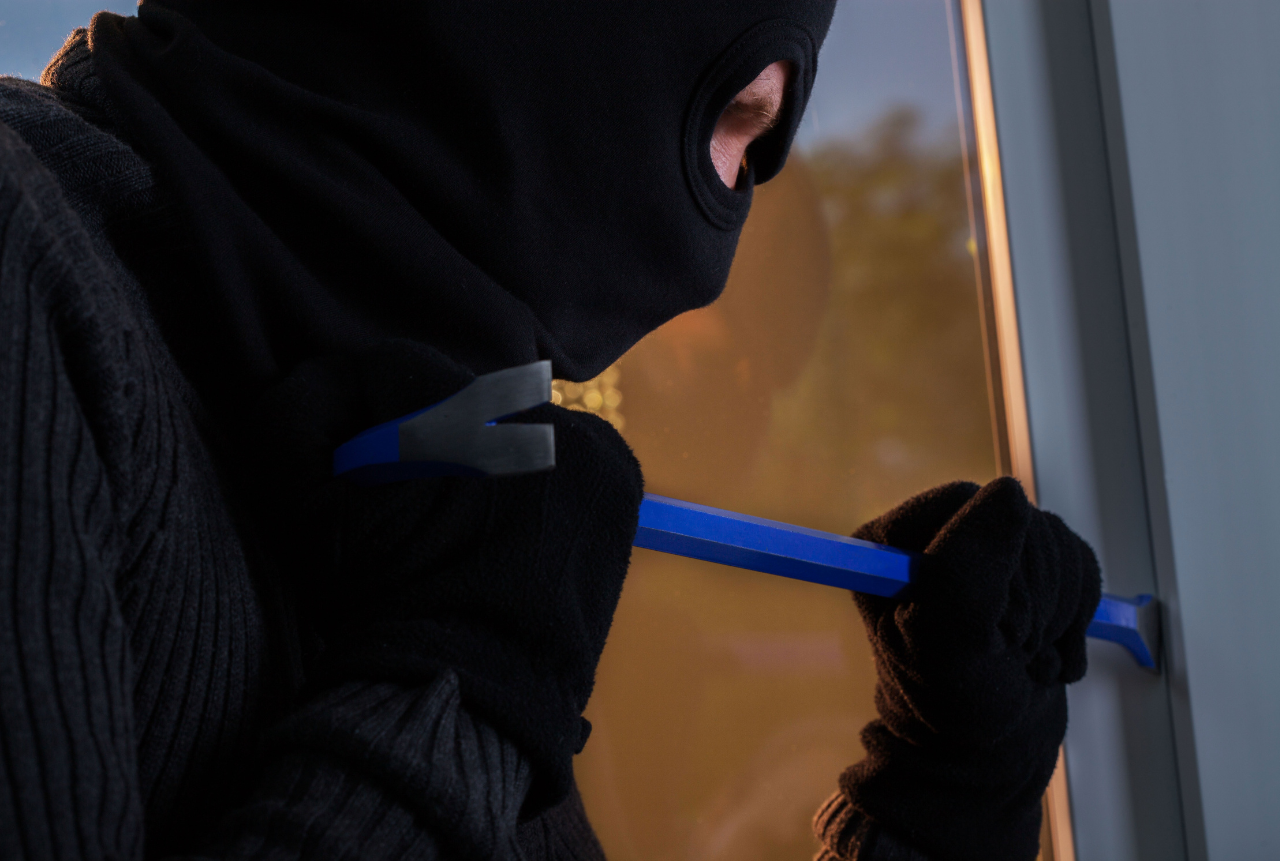
To be rated for security, the door must survive a series of brutal lab tests. We’re talking about a knife shear test (slashing the mesh), an impact test (the battering ram), and a jemmy test (prying the locks). If it can’t handle a crowbar or a box cutter, it’s not a security door.
2️⃣ The Triple-Lock System
A single lock in the middle is a pivot point for a burglar. A real security screen uses a triple-lock that anchors the door at the top, middle, and bottom with one turn of the key. This stops an intruder from simply peeling the corners of the door back to gain leverage.
3️⃣ 316 Marine Grade Stainless Steel
Because we’re on the coast, standard mesh won’t cut it. 316 Stainless Steel is the gold standard for Moreton Bay; it’s sledgehammer-proof and specifically built to handle the salt air without turning into a rust bucket within two years.
Clearance & Hardware Hurdles
The biggest reason a DIY security door fails (or why a ‘cheap’ installer walks away) is a lack of clearance. When you’re retrofitting, you’re asking two doors to occupy a space originally designed for one.
Here are the potential issues we check for:
💥 The Handle Clash
If your existing handle or lever sticks out too far, it’ll hit the new screen before either door can close.
🛠️ The Fix: We use a build-out frame to create a ‘buffer zone’ (usually 20mm–30mm), giving the hardware plenty of room to coexist.
↔️ Closer Arm Clearance
Pneumatic soft-close arms often sit right where the new security frame needs to be.
🛠️ The Fix: We can usually relocate the closer or use a low-profile bracket so your main door can still open fully.
🔃 The ‘Deep Pivot’ Problem
Modern pivot doors rotate on a point set back from the frame. As they open, the back edge of the door actually swings outward
🛠️ The Fix: These require a deep-set frame to ensure the security screen doesn't get clipped by the main door as it rotates.
🎯 Trade Tip:Open your door halfway and measure from the tip of the handle to the edge of the architrave. If it’s less than 50mm, you’ll definitely need a build-out.
Installation: Face Fit vs Recess Fit
There are two ways to mount a retrofit screen. The choice depends entirely on how much ‘real estate’ we have to work with on your existing frame.
Recess Fit (The Tucked In Look)
The screen sits neatly inside the door jamb. When finished, it looks like it was built into the original house.
☝️ The Catch: You need at least 20mm of flat, clear space inside the frame. If your weather strips or door stops are in the way, this won't work.
Face Fit (The Front Mount)
We mount the screen directly onto the front of the architrave (the trim around the door).
👍 The Benefit: This is the ultimate problem-solver. It moves the screen forward, creating the gap needed to clear chunky handles or shallow frames.
⚖️ The Verdict: Neither is ‘stronger’. A Face Fit is often the smarter choice for older homes where frames are thin or have shifted over time.
The Custom Security Screen Door Guide: Your Home Safety Summary
For many homeowners, choosing the right level of protection for their family starts at the doorway. Whether you have standard entry doors or require custom builds for large doors, we provide a solution that meets strict Australian Standards.
From heavy-duty hinges on our hinged doors to specialised privacy mesh, our prowler proof options ensure your home stays secure without sacrificing style.
Ready to upgrade your home’s security? Call our friendly Moreton Bay Security Solutions team on 0439 015 936 or complete our enquiry form today to find the perfect fit.